Dry, frizzy hair: why it happens and how to care for it
Why hair gets dry and frizzy, how porosity changes which products help, how to use conditioner and heat protection, and gentler habits for every texture.
Key takeaways
- Frizz and dryness usually come from a roughened outer layer of the hair, called the cuticle, which is worn down by heat, chemical treatments, rough handling, and harsh washing.
- Conditioner after every wash, and a leave-in product on the lengths if you need it, are the most reliable ways to make hair smoother and easier to manage.
- Lower heat settings, less frequent heat styling, and a heat protectant reduce damage for every hair type.
- Damaged hair cannot repair itself, so the goal is to protect new growth and make existing lengths look and feel better while they grow out.
Dry, frizzy hair is one of the most common hair complaints, and it affects every texture, from fine and straight to tightly coiled. It is rarely a sign of anything medical. Most of the time it reflects how the outer layer of each strand has been treated: by heat, color, washing, brushing, and the weather. This guide explains what is going on, which products genuinely help, and which habits make the biggest difference.
Why hair gets dry and frizzy
The cuticle: hair's protective outer layer
Each hair has a protective outer layer called the cuticle, made of overlapping flat scales that sit like shingles on a roof. Underneath is the cortex, which gives hair its strength. The cuticle is also coated in a thin layer of natural fats that helps hair repel water and slide smoothly against other strands.
When the cuticle is smooth and flat, hair reflects light, feels soft, and tangles less. Over time, everyday wear lifts and cracks those scales and strips away the fatty coating. Researchers call this weathering. Weathered hair has more friction between strands, tangles more easily, and frizzes.
What wears the cuticle down
- Heat. Blow dryers, flat irons, curling irons, and hot combs all damage hair, especially at high settings.
- Chemical treatments. Bleaching, coloring, perming, and relaxing change the hair's internal structure and are among the most damaging things you can do to it.
- Rough handling. Rubbing hair with a towel, brushing it while wet, and tugging through tangles all wear the cuticle.
- Harsh washing. Strong cleansing ingredients in shampoo remove oil and dirt well, but they can leave hair with a negative electrical charge that increases friction and frizz.
- Sun, chlorine, and humidity. Sunlight and pool water add to weathering. In humid weather, hair takes up water from the air, and strands with a damaged cuticle tend to do this unevenly, which is one reason frizz often gets worse on damp days.
Hair texture matters
Curly and coily hair often feels drier and usually needs more conditioning than straight hair, partly because natural oil from the scalp has a harder time spreading along a curved strand. Afro-textured hair also tends to have a thinner cuticle, which makes it more fragile and more prone to breakage. That is why gentle handling and conditioning matter even more for these textures.
Porosity: how easily hair takes up water
Porosity describes how readily hair absorbs and holds on to water and products. Hair with a damaged or lifted cuticle is more porous. Bleached and chemically treated hair is noticeably more porous than untreated hair, and it also attracts conditioning ingredients more strongly.
- More porous hair tends to soak up water quickly, dry fast, feel dry, and frizz easily. It often does well with richer conditioners and leave-in products.
- Less porous hair tends to take longer to get wet and dry, and products may sit on top rather than soaking in. Lighter products used in smaller amounts often work better.
Porosity can vary along a single strand, because the ends are the oldest part of the hair and have been weathered the longest. Home tests only give a rough idea, but they can help you choose products. The free tools are a starting point while you compare how your hair behaves.
Conditioner, leave-ins, and oils explained
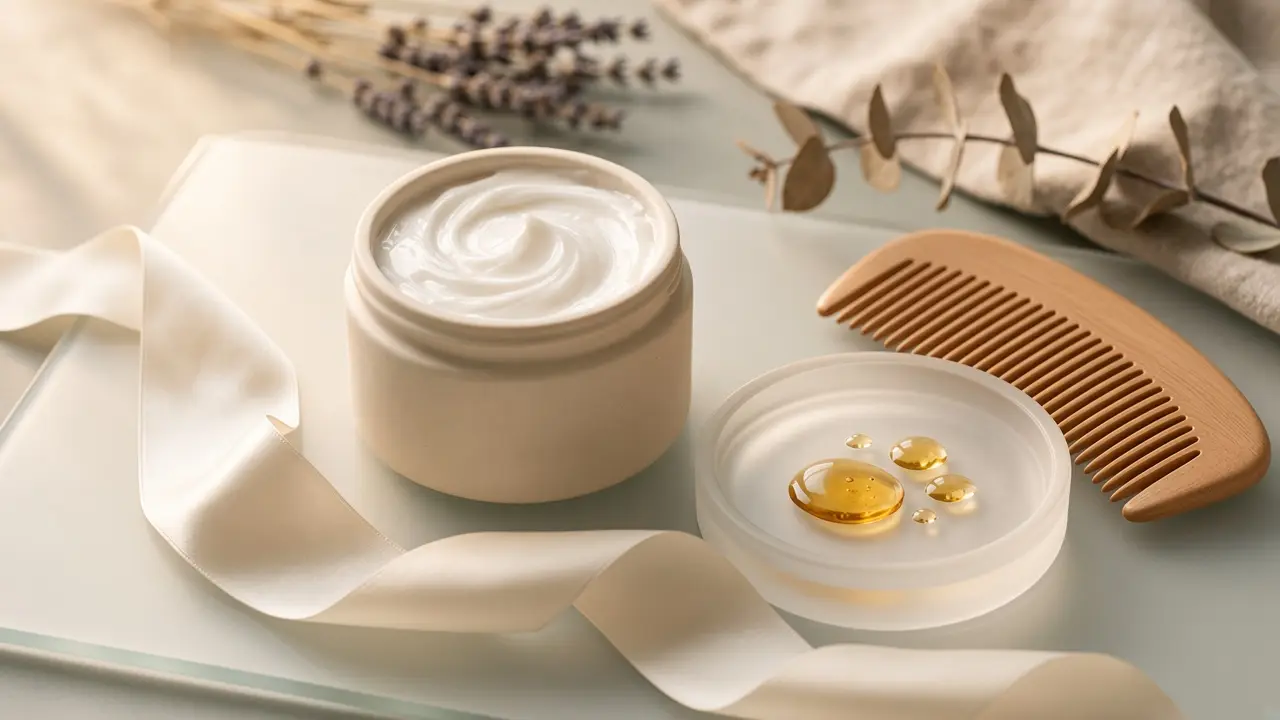
Rinse-out conditioner
Conditioner is the most useful single product for dry or frizzy hair. It works by adding positively charged ingredients that cancel out the negative charge left by shampoo, and by coating the cuticle so strands slide past each other more easily. The result is less friction, less frizz, and easier detangling.
Dermatologists recommend using conditioner after every shampoo. If your hair is fine or straight, apply it mainly to the ends. If it is dry or curly, apply it along the full length.
Silicones such as dimethicone are among the most common conditioning ingredients. They smooth the cuticle, add shine, and some help protect hair from heat. Look for dimethicone and similar names on the ingredient list.
Leave-in conditioner
A leave-in conditioner stays on the hair after washing. It can be especially helpful if your hair is color-treated, permed, heat-styled, long, curly, dry, or prone to tangles. Many people notice less frizz and easier combing straight away.
- Apply it to damp hair after towel drying, using the smallest amount that works.
- Keep it on the mid-lengths and ends, not the scalp, to avoid build-up.
- Choose one made for your hair type. Curly hair usually needs more conditioning, and fine hair usually needs a lighter formula.
- Do not use a rinse-out conditioner as a leave-in. They are formulated differently, and rinse-out products are not designed to stay on hair.
Oils
If your hair still feels dry or frizzy after conditioning, a small amount of oil smoothed over the lengths can add softness and shine. Use a little at a time, especially on fine hair, which can quickly look greasy.
Protect your hair from heat
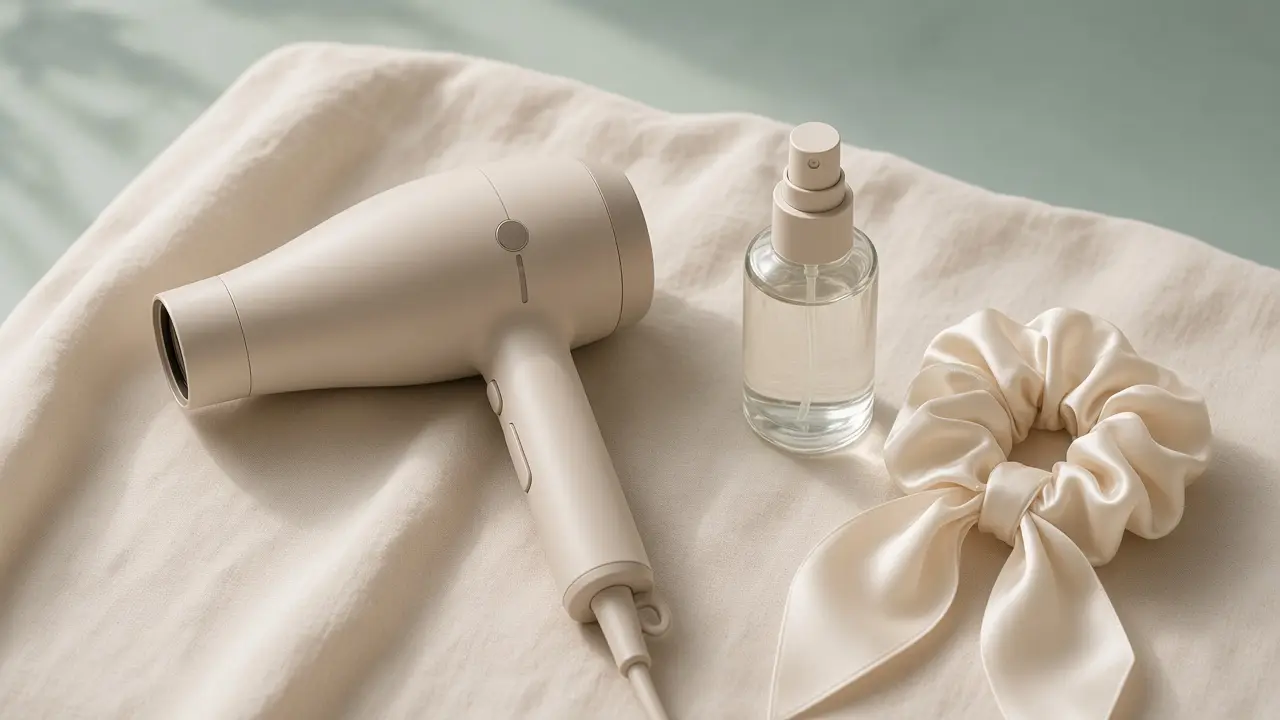
Heat damage builds up over time, so the aim is to use less of it and use it more carefully.
- Let your hair air dry when you can.
- Use the lowest heat setting that gives you the style you want. Coarse or very thick hair may need a little more heat, but go up gradually.
- Limit how long a hot tool touches any one section, and aim to use hot tools once a week or less.
- Apply a heat protectant product first. Some leave-in conditioners double as heat protectants and will say so on the pack.
- If you press or straighten textured hair, a tool with a temperature dial lets you stay in control.
How often to wash
Wash based on how oily your scalp gets, not on a fixed schedule. Shampoo the scalp, where the oil and build-up are, and let the lather run through the lengths as you rinse instead of scrubbing it into them.
- Straight hair with an oily scalp may need washing every day.
- Dry, curly, coily, or thick hair usually needs washing less often. Dermatologists suggest washing when needed, at least every two to three weeks. For Black hair, the AAD suggests once a week or every other week to prevent drying product build-up.
Wash often enough to keep the scalp comfortable, and our product guides explain which shampoo formulas are gentler.
Gentle styling for every texture
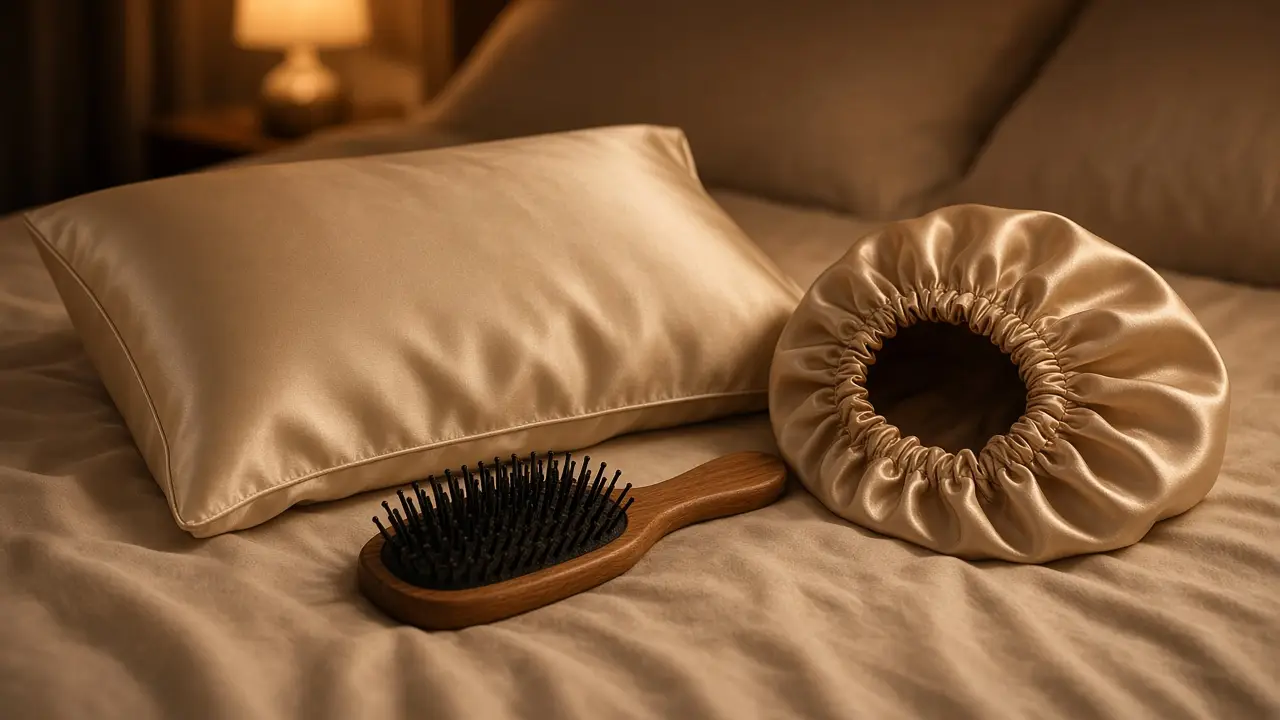
- Detangle carefully. Use a wide-tooth comb rather than a brush on wet hair. If you have curly or coily hair, comb while it is damp, ideally in the shower with conditioner still in. If you have straight hair, let it dry a little first. Start at the ends and work up.
- Brush only to style. The idea that hair needs 100 brush strokes a day is a myth, and over-brushing causes breakage.
- Reduce friction overnight. A silk or satin pillowcase, or a loose satin bonnet, snags hair less than a cotton pillowcase. It will not repair hair that is already broken.
- Avoid tight styles. Ponytails, buns, braids, and cornrows pulled tight stress the hair and can lead to hair loss over time. Use covered hair ties and change your style often. Our guide to hair fall explains traction alopecia.
- Space out chemical services. Leave more time between color, relaxer, or perm touch-ups, and stick to one service at a time. If you want both, relax or perm first and wait two weeks before coloring.
- Protect hair when swimming. Wear a swim cap, rinse straight after, then shampoo and condition.
What not to do
- Do not rub shampoo into the lengths of your hair.
- Do not skip conditioner after washing.
- Do not use the highest heat setting by default.
- Do not apply relaxer to hair that has already been relaxed.
- Do not expect a product to undo damage. Trimming the most damaged ends often helps hair look healthier faster than any treatment. Our guide to hair growth myths explains what trims can and cannot do.
When to see a doctor or dermatologist
The short version
Dry, frizzy hair is mostly a cuticle problem. Wash the scalp gently, condition every time, add a leave-in if your hair needs it, turn the heat down, and handle wet hair carefully. Damaged lengths will not heal, but they can look and feel much better while healthier hair grows in.
Frequently asked questions
Can you repair damaged hair?
Hair is not living tissue once it leaves the scalp, so split ends and cracked cuticles cannot truly heal. Conditioners and leave-ins coat the strand so it feels smoother and breaks less, and trimming removes the most damaged ends. New hair grows in undamaged if you change the habits that caused the damage.
Is it bad to use conditioner every day?
Not for most people. Dermatologists recommend conditioner after every shampoo. If you have fine or straight hair and it starts to look flat or greasy, use less and keep it on the ends rather than near the scalp.
Are silicones bad for hair?
Silicones such as dimethicone are among the most widely used conditioning ingredients because they smooth the cuticle, reduce friction, and can help protect hair from heat. Some people find heavier silicones build up on fine hair, which a regular shampoo usually removes.
Why is my hair frizzier when it is humid?
Hair takes up water from the air, and strands with a lifted or damaged cuticle tend to absorb and lose water unevenly, which disrupts their shape. Conditioning products that coat the hair reduce this and are often labeled as anti-humidity or anti-frizz.
Sources
- Tips for healthy hair — American Academy of Dermatology
- 10 hair care habits that can damage your hair — American Academy of Dermatology
- Dermatologists' top tips for using leave-in conditioner — American Academy of Dermatology
- Black hair: Tips for everyday care — American Academy of Dermatology
- Hair cosmetics: an overview (Gavazzoni Dias, 2015) — International Journal of Trichology
This guide is general information, not medical advice. It cannot diagnose a condition or replace a doctor or dermatologist who can examine you. Read our medical disclaimer.